
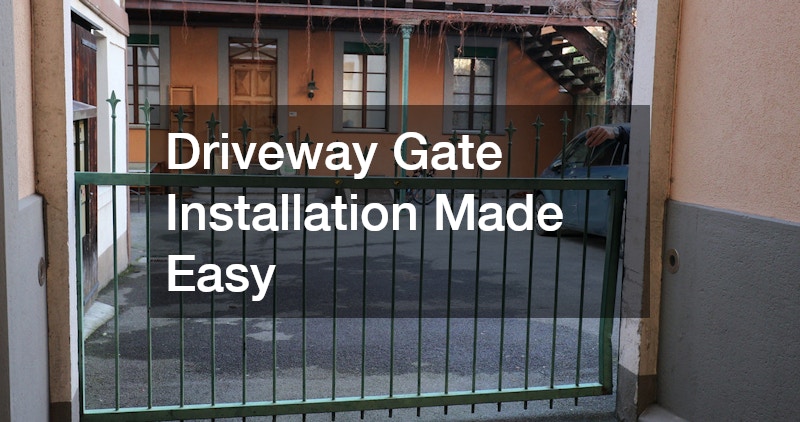
When considering driveway gate installation, selecting the right type of gate is crucial for both security and aesthetic appeal. A well-chosen gate not only enhances the property’s look but also serves as the first line of defense against unauthorized access. Whether your home is modern or traditional, the right gate can make all the difference in creating a welcoming entrance or deterring unwanted visitors.
It’s important to evaluate factors such as material, style, and automation. Pay special attention to the environment and local regulations to ensure compliance.
Different materials offer distinct advantages and drawbacks, which could significantly affect the gate’s functionality and lifespan. For instance, wooden gates provide a classic, timeless appeal but require regular maintenance to withstand weather conditions. Metal gates, on the other hand, boast durability and offer superior security, though they can be susceptible to rust without proper coating. Aluminum gates present a lightweight, rust-resistant option with less maintenance compared to wrought iron or steel. Each option must be carefully weighed against your budget and personal preferences to achieve the best outcome.
Automation is another consideration that substantially benefits the functionality of your driveway gate. Automated gates add not just convenience but also enhance safety by allowing you to control entry and exit without leaving your vehicle. Moreover, they can be equipped with modern security features such as cameras, intercoms, and remote-controlled access. The installation of such systems might require professionals, but the investment is worth the hassle-free operation down the line. Given these points, selecting your driveway gate demands thoughtful consideration to ensure you achieve the desired balance of style, security, and convenience.
Preparation and Planning for Installation
Before diving into the actual installation of your driveway gate, thorough preparation and planning are essential. Start by assessing the entry point where the gate will be installed; ensure that there is enough space for the gate to function properly, including room for swinging or sliding, depending on the gate’s mechanism. It’s crucial to note that every type of gate has different space and operational requirements. Misjudging space requirements can lead to functional issues and necessitate costly adjustments or re-installations later on.
Your planning should also include a detailed review of necessary permits and legal requirements. Some localities have specific ordinances regarding the size and type of gate, often requiring a permit before installation. Ignoring these legalities can result in fines or the forced removal of your newly installed gate. Consulting with a local authority or a professional driveway gate installer can provide clarity on what is legally permissible in your area. This step ensures that your installation proceeds smoothly without legal hiccups down the road.
In addition to legal preparations, consider the tools and assistance required for installation. Installing a driveway gate is no small feat and often demands more than one person, especially when dealing with heavier materials. Make a comprehensive checklist of tools such as leveling instruments, power drills, cement, and brackets. Depending on your gate’s complexity, you might opt for a professional installation to avoid errors that could compromise the gate’s integrity or your property’s security. This pre-installation phase is fundamental in making the overall process manageable and efficient.
Step-by-step Guide to Installing a Driveway Gate
With adequate planning completed, you are now ready to begin the installation of your driveway gate. First, mark the placement of each post at your driveway’s entrance; accuracy here is essential to ensure the gate aligns perfectly. Most gate kits will come with detailed instructions and may include templates to assist in correct placement. Once your markings are secure, start digging the holes where the posts will go. It is generally recommended that holes should be at least one-third the height of the posts to achieve stability, particularly for heavy gates.
After digging the holes, position the first post and pour concrete to anchor it into place. Ensure that the post is vertical and level, then allow the concrete to cure thoroughly, which often takes 24–48 hours. Some prefer quick-set concrete to speed up the process, but traditional concrete might offer more stability over time. Once the first post is secured, repeat the process with the second post, keeping an eye on alignment relative to the first. Consistent leveling ensures that the gate will open and close smoothly without unwanted resistance or friction.
Once the posts are firmly established and the concrete is completely cured, the gate panels or boards can be attached. Follow the manufacturer’s instructions for attaching hinges and securing the gate to the posts, typically using bolts and brackets provided in the kit. As you hang the panels, continually check for alignment and proper spacing to facilitate ease of use. Additional features like lock mechanisms or automation components should be added at this stage according to the product directions, completing your driveway gate installation skillfully.